If you have played the Aviator online game, you already know the whole thing lives in one number: the multiplier. A plane takes off, the multiplier climbs from 1.00x, and at some random point the plane flies away and the round ends. Cash out before that and you keep your bet times whatever the multiplier showed when you tapped. Miss it and the bet is gone. That is the entire game. This guide walks through how the Aviator crash multiplier really works, how to think about when to cash out, and why the predictor apps you keep seeing advertised cannot do what they claim.
People also call Aviator the aeroplane betting game or the plane money game. Same thing. Aviator is just the name of the game itself.
What the crash multiplier actually is
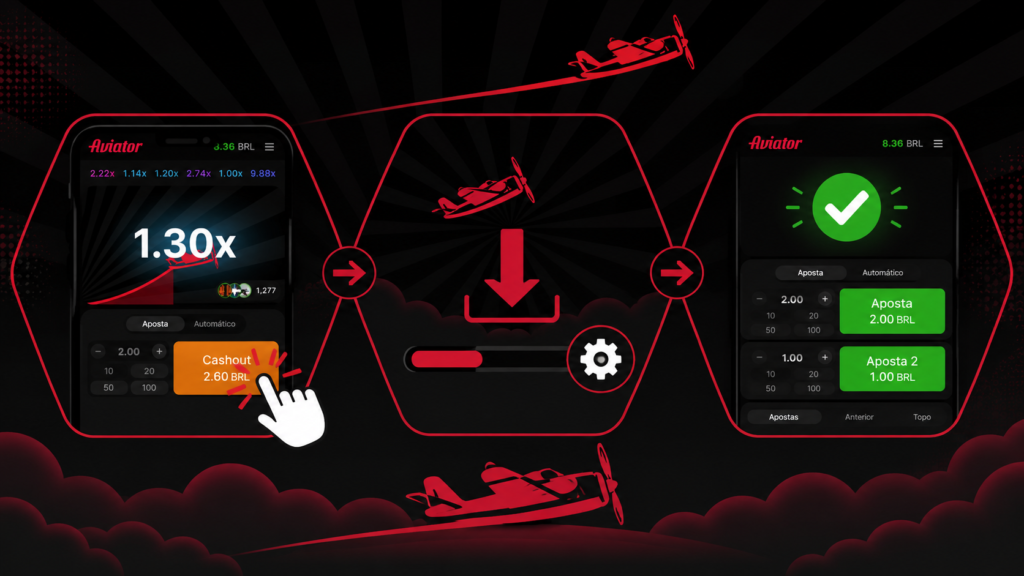
The multiplier starts at 1.00x the moment a round begins and rises from there. The longer the plane stays up, the bigger it gets. Cash out at 2.00x and you double your bet. Cash out at 10.00x and you win ten times. The catch is that the round can end at any moment, and you have no warning.
Where it ends is called the crash point, and it is random. Sometimes the plane is gone before you can blink, at 1.01x. Sometimes it climbs past 50x while everyone who cashed out at 2x watches and groans. Neither one tells you anything about the next round. That randomness is not a bug you can beat. It is the game.
How a round plays out
Every round runs the same way, and once you have seen a few it is easy to follow.
- You place your bet before the round starts.
- The plane takes off and the multiplier climbs.
- You tap cash out whenever you want, and your bet settles at the multiplier shown.
- If the plane flies off before you tap, the bet is lost.
The one thing worth burning into your memory: the crash point is decided by a random number generator before the plane even takes off. Watching the multiplier rise feels like information. It is not. The result was already set.
When to cash out: the only real decision
Aviator gives you exactly one choice, and it is a trade-off with no free side. Cash out low and you win small but often. Hold out for a big multiplier and you win rarely but large. The house edge sits inside the crash distribution either way, so no target beats the game over time. What your target changes is how the swings feel.
| Your target | What to expect |
|---|---|
| Around 1.5x | Small wins that come often, and one early crash wipes out a few of them |
| Around 2x | Roughly a coin flip in feel, and the most common choice among regulars |
| 5x and above | Long dry runs are normal, and chasing them with a bigger bet is how balances vanish |
I will be blunt about this part. There is no clever number. If someone tells you 2x is the safe target or that you should always ride to 10x, they are describing a preference, not an edge. Pick a target you can stick to and let the auto cash-out enforce it.
The two-bet panel and auto cash-out
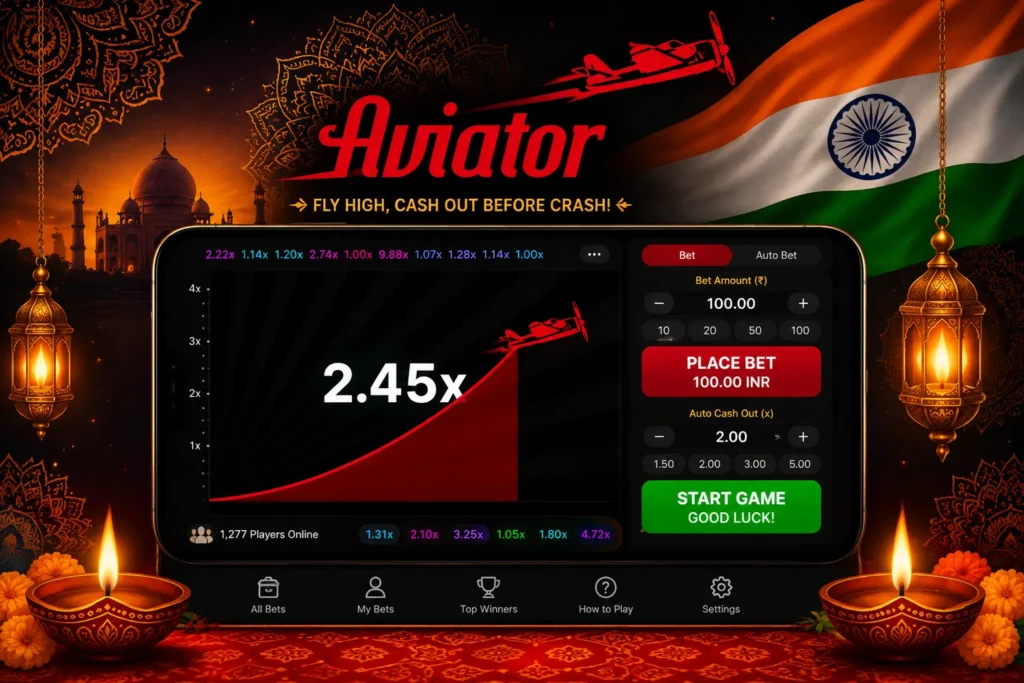
Aviator lets you run two bets in the same round, each with its own stake and its own cash-out. Most people use it to take one bet out early to cover the round’s cost, then let the second one ride. It does not improve your expected return, two bets at the same house edge is still the same house edge, but it does change the shape of the swings and, honestly, it makes it easier to stop yourself holding the whole stake too long.
Auto cash-out is the feature I would actually use from the first round. You set a target before the plane takes off, and the game closes your bet there automatically. It removes reaction time as a factor, and it takes the decision away from you at the exact moment your nerve tends to fail.
Managing the multiplier without fooling yourself
You cannot control the crash point, so control the only things you can: your stake, your target, and when you walk away. A few habits that genuinely help:
- Set a cash-out target before the round and use auto cash-out to hold you to it, so the decision is made when you are calm rather than mid-flight.
- Split your money into small bets across several rounds instead of one big stake. It will not change the odds, but it keeps a single bad round from taking everything.
- Set a loss limit for the session and stop when you hit it. Decide the number before you start, not after you are down.
- Set a profit target too, and actually leave when you reach it. The urge to keep going after a good run is what gives it all back.
- Never chase a loss. Doubling up after losing feels logical and is the single fastest way to empty a balance.
About those Aviator predictor and hack apps
You have seen the ads. A predictor that knows where the plane will stop, a hack APK, a paid VIP channel posting signals before each round. Here is the honest version: none of it works, and it cannot, because the crash point is generated before the round starts. There is nothing on your screen that carries the answer, so there is nothing for a predictor to read.
What those apps actually do is take your subscription, farm your ad views, or in the case of some hack APKs, help themselves to your phone. Think about it for a second. If a tool could really predict a random result, the last thing its owner would do is sell it to you for a few hundred rupees a month. Treat every one of them as a paid product built on a lie.
The part worth checking is whether the game is provably fair, meaning the operator publishes a hashed result before the round so you can confirm afterwards that it was not tampered with. That is proof after the fact. It is not prediction, and nobody can sell you prediction.
Where Aviator sits among the other games
The Aviator online game is one version of the crash game format, which also shows up in the app with other themes. If you would rather bet on a draw than time a cash-out, Wingo Lottery is the opposite kind of instant game: you pick a colour or number, wait for the round, and there is no cashing out to get wrong.
Playing responsibly
Aviator is a game of chance with a house edge. The two-bet panel and auto cash-out help you run a session, but they do not make the game beatable, and no amount of watching past rounds changes the next one.
Decide how much you intend to spend before you start, not after you are already down. Do not try to win losses back at any cost. If you notice you are playing with money meant for something else, that is the moment to stop.
Real-money games are for adults aged 18 and over. Account limits and self-exclusion tools are on our Responsible Gaming page. In India, real-money games are regulated at the state level, so check the rules where you live before you bet. For more on responsible play, see the All India Gaming Federation.
Frequently asked questions
What is the crash multiplier in Aviator?
It is the number that starts at 1.00x when the round begins and climbs until the plane flies away. Your payout is your bet times the multiplier at the moment you cash out.
How high can the Aviator multiplier go?
There is no fixed pattern. It can crash at 1.01x or run past 50x. Each round is random and independent of the last.
When should I cash out?
There is no target that beats the house edge. Lower targets win more often for less, higher targets pay more but lose far more often. Pick one you can stick to and use auto cash-out.
Do Aviator predictors or hacks work?
No. The crash point is set before the round starts, so there is nothing to predict. Some predictor APKs are also malware.
What is the aeroplane betting game?
It is the everyday Indian name for Aviator and other plane-themed crash games.